
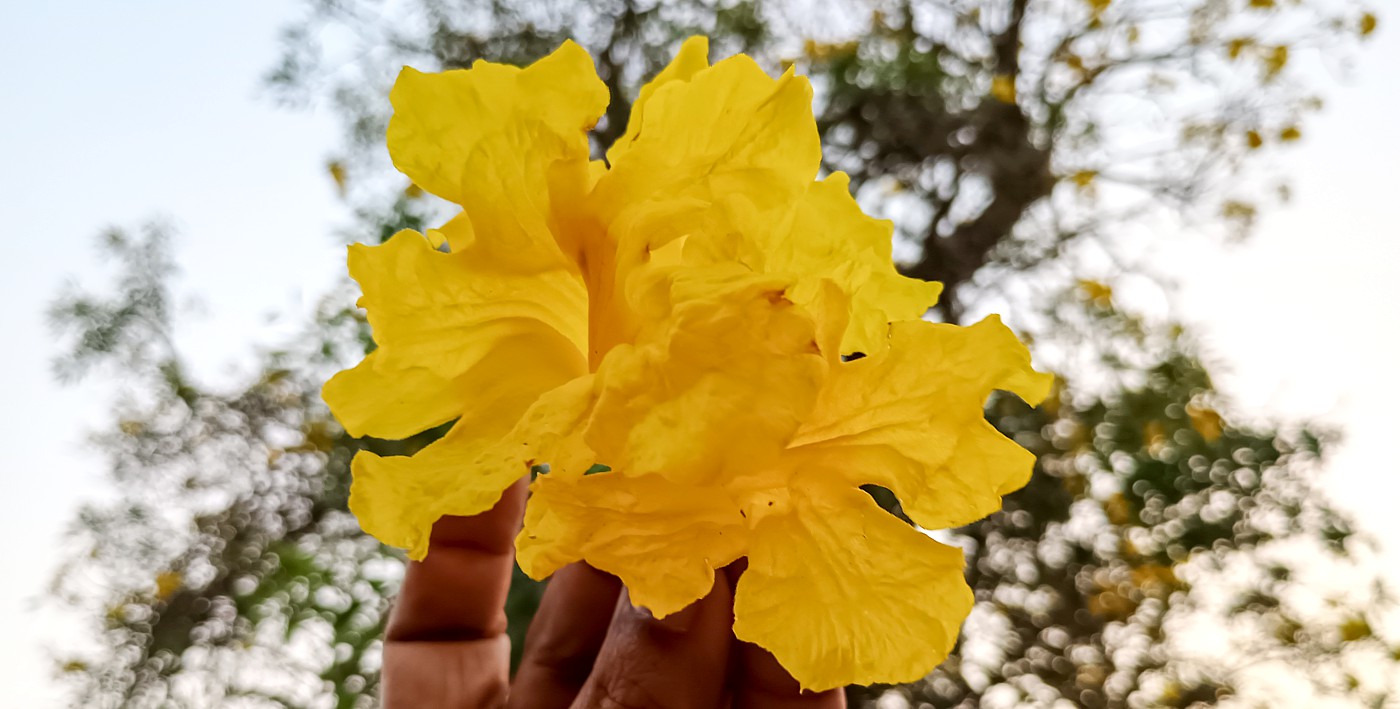
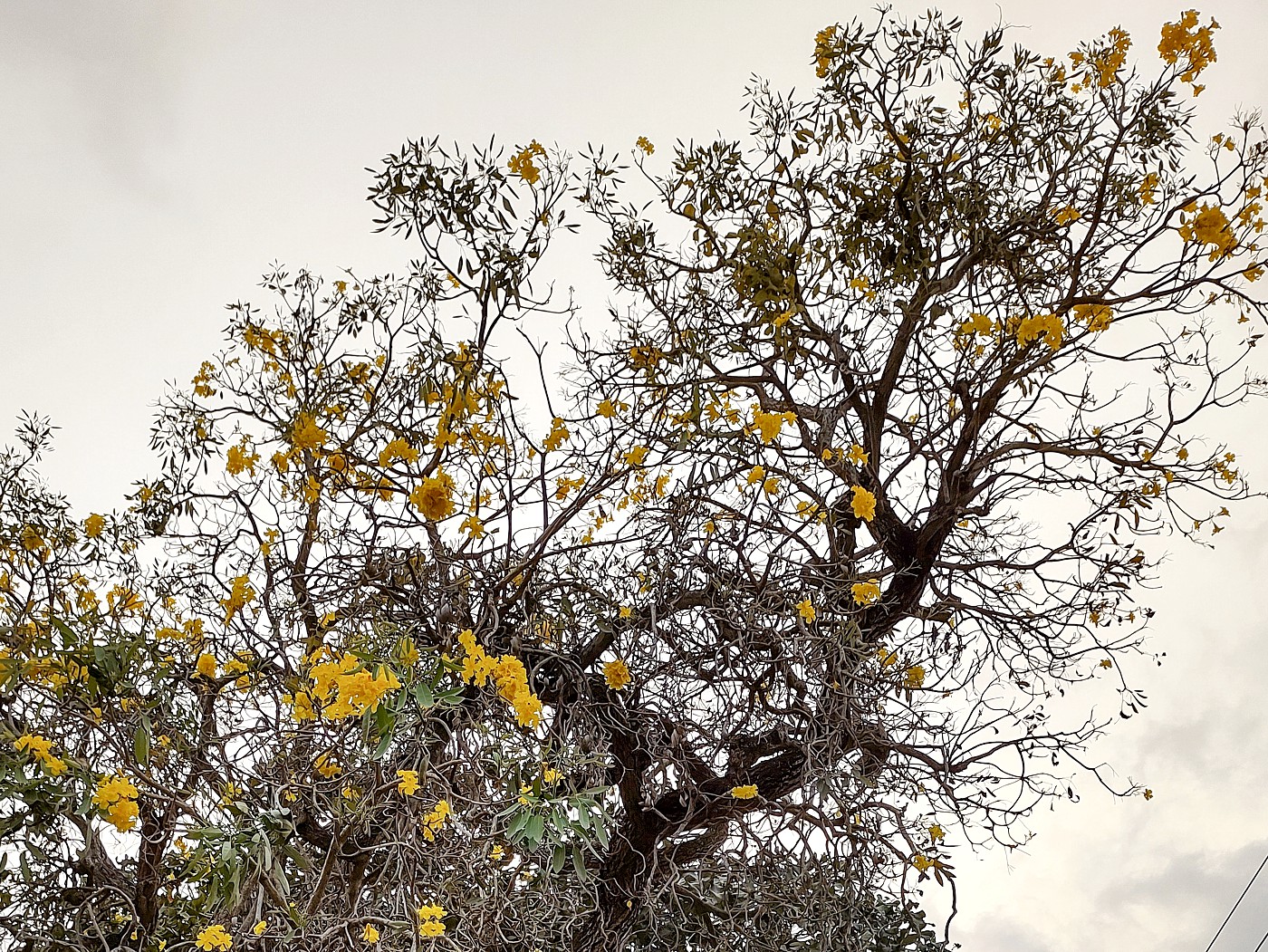
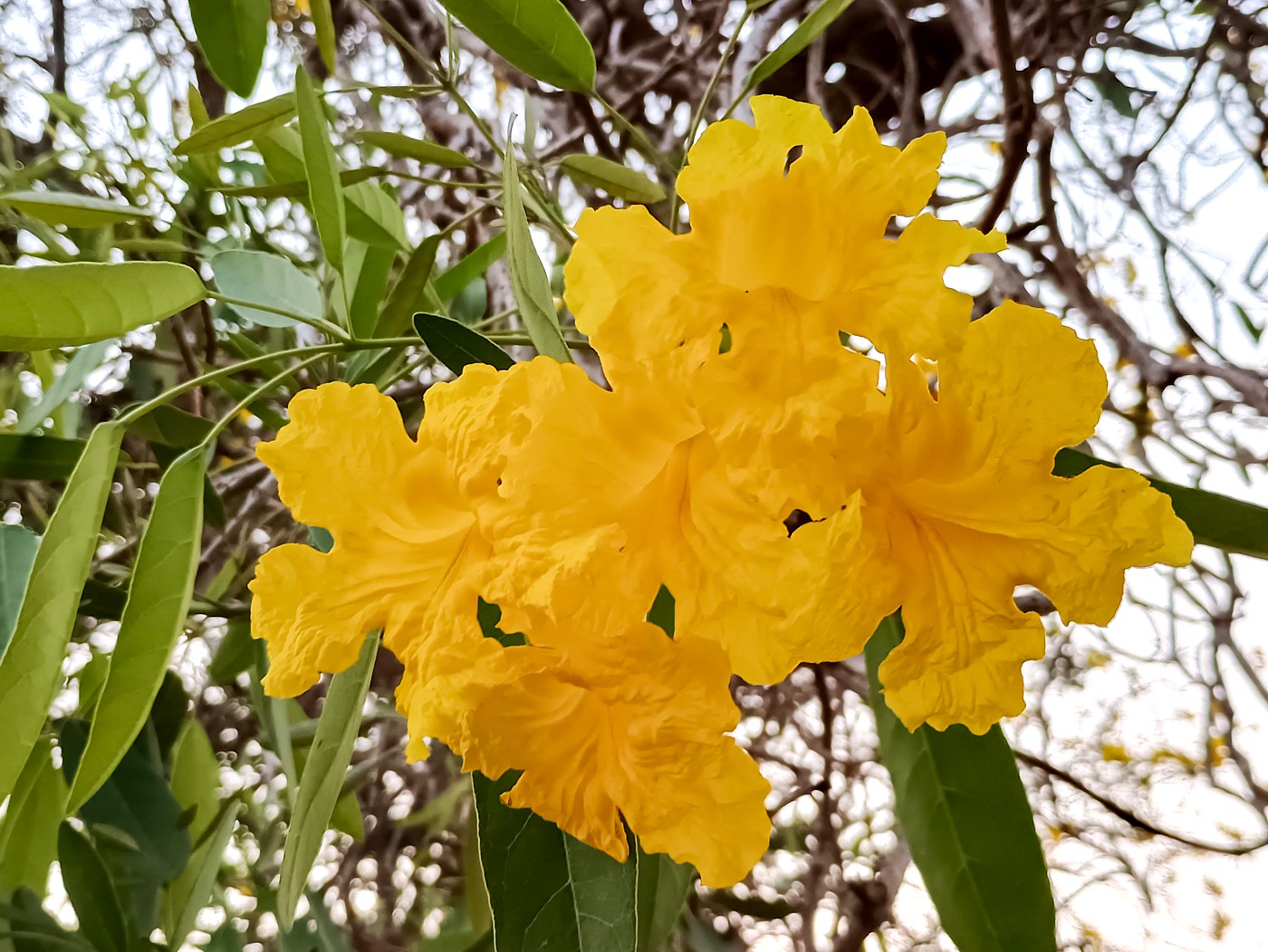
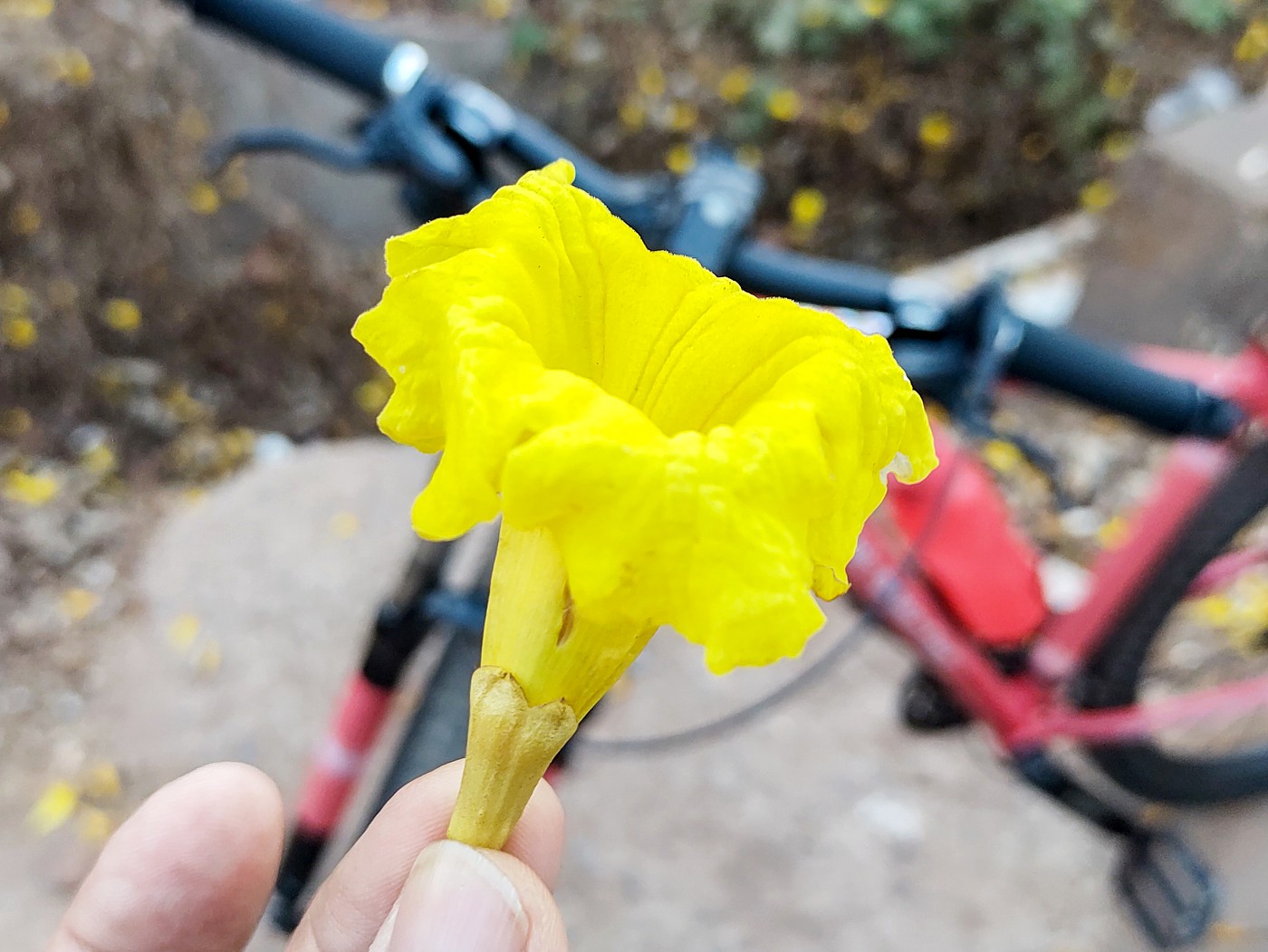
Summer in Goa often slips in quietly, but the landscape soon begins to reveal its seasonal spectacles. As the days grow hotter, several flowering trees burst into bloom, briefly transforming dusty village roads into corridors of colour. On a recent cycling ride through the quiet village of Maina, one such unexpected sight made me slow down and look twice — a tree crowned with a dazzling canopy of golden-yellow, trumpet-shaped flowers glowing against the fierce summer sky.
A quick online search confirmed the identity of this striking tree — Tabebuia aurea, commonly known as the Silver Trumpet Tree, Caribbean Trumpet Tree, or Yellow Tabebuia.
Tabebuia aurea (also known botanically as Handroanthus aureus) is native to South America, particularly in countries such as Suriname, Brazil, eastern Bolivia, Peru, Paraguay and northern Argentina. Interestingly, despite being widely known as the “Caribbean Trumpet Tree”, the species is not native to the Caribbean. It belongs to the Bignoniaceae family, which also includes the well-known Jacaranda, and is widely planted across tropical regions of the world as an ornamental tree prized for its spectacular seasonal blooms.
Although Tabebuia aurea is not native to India, it has occasionally been introduced as an ornamental tree in gardens and along avenues. This tree in Maina carries an interesting local story. It is said to have been brought to Goa and planted in their garden by the Moniz family during one of their trips home from the port city of Aden in the 1950s, where they had been working — a time when many Goans found employment in the bustling Arabian port.
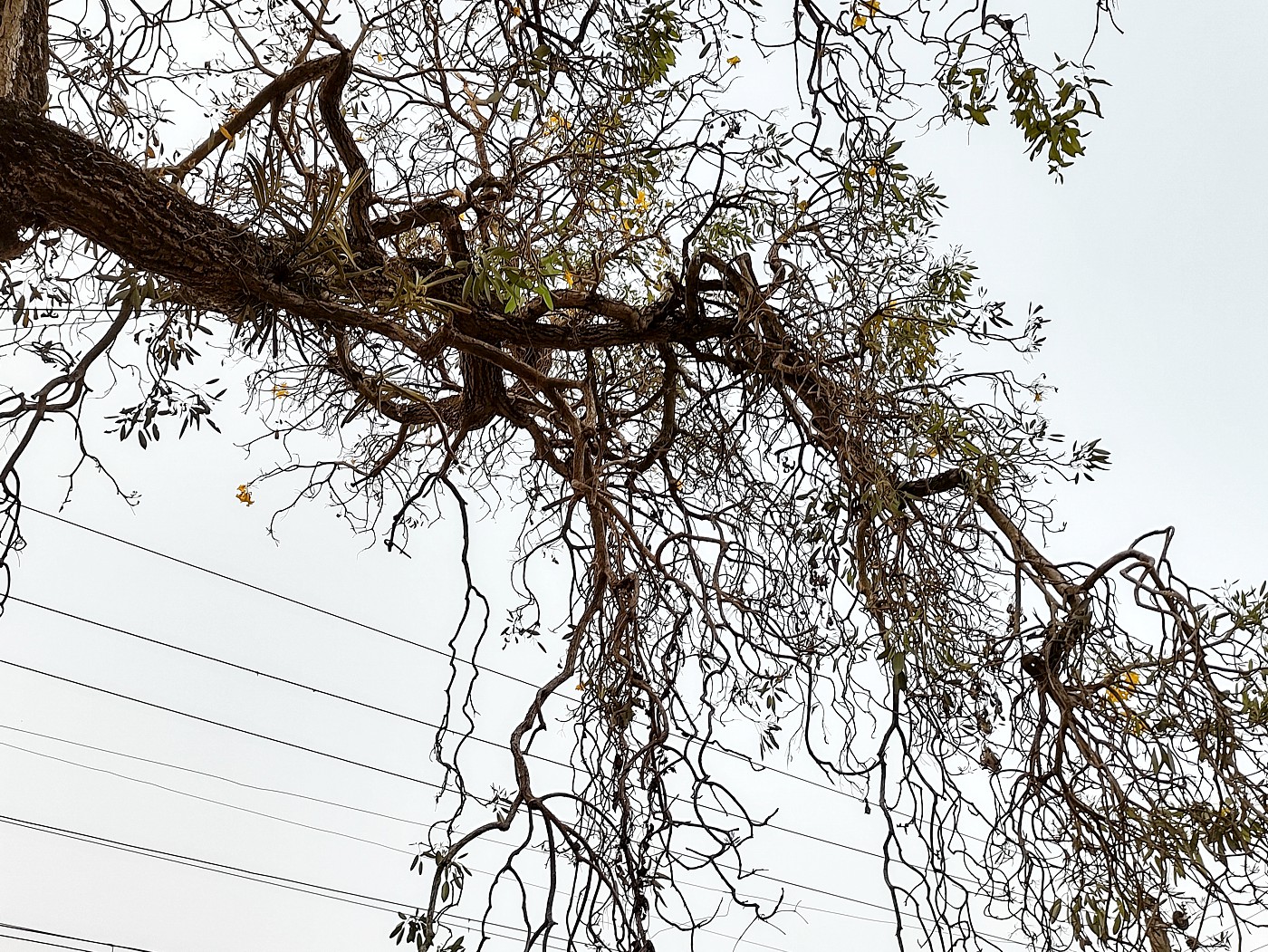
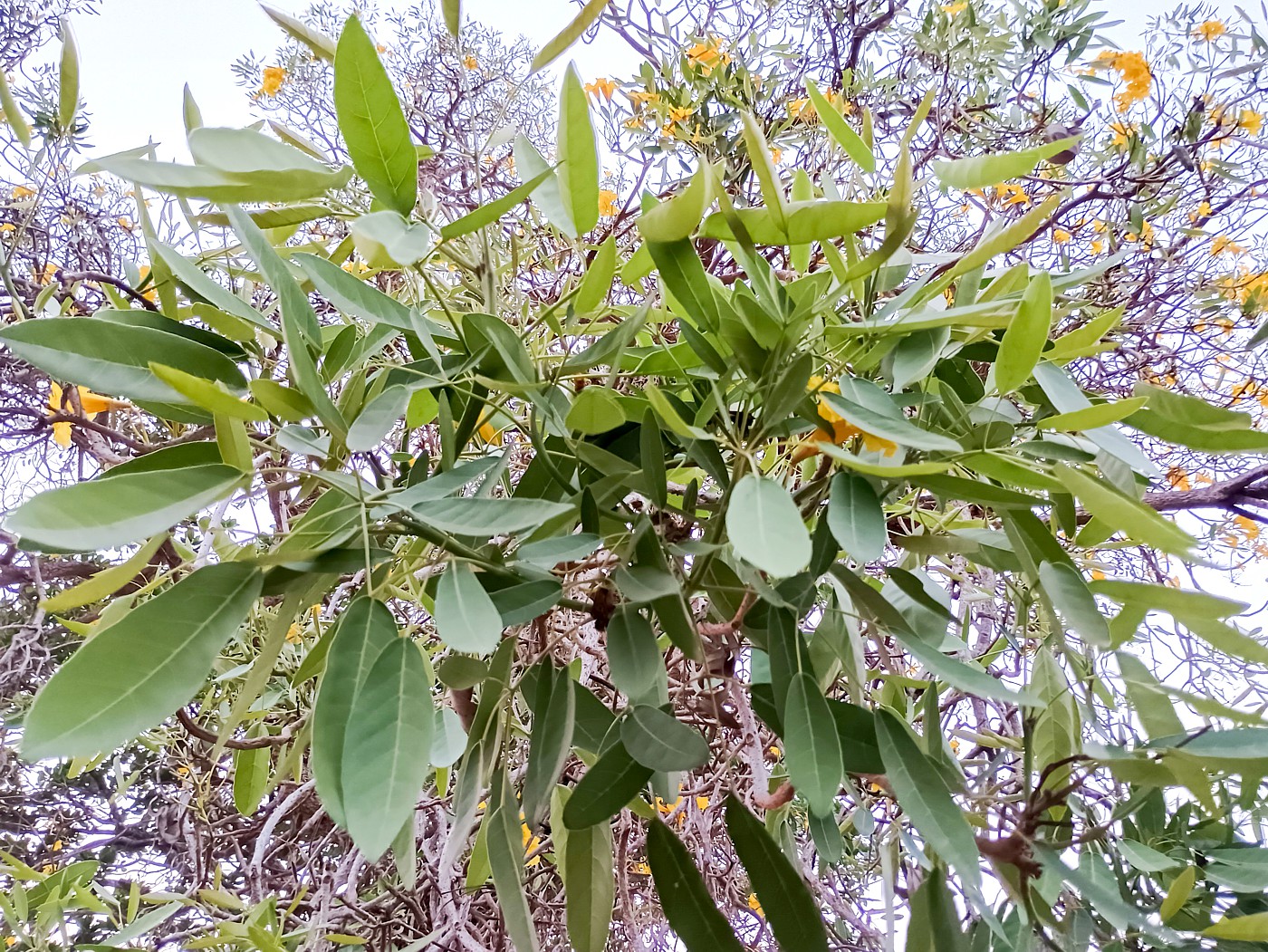
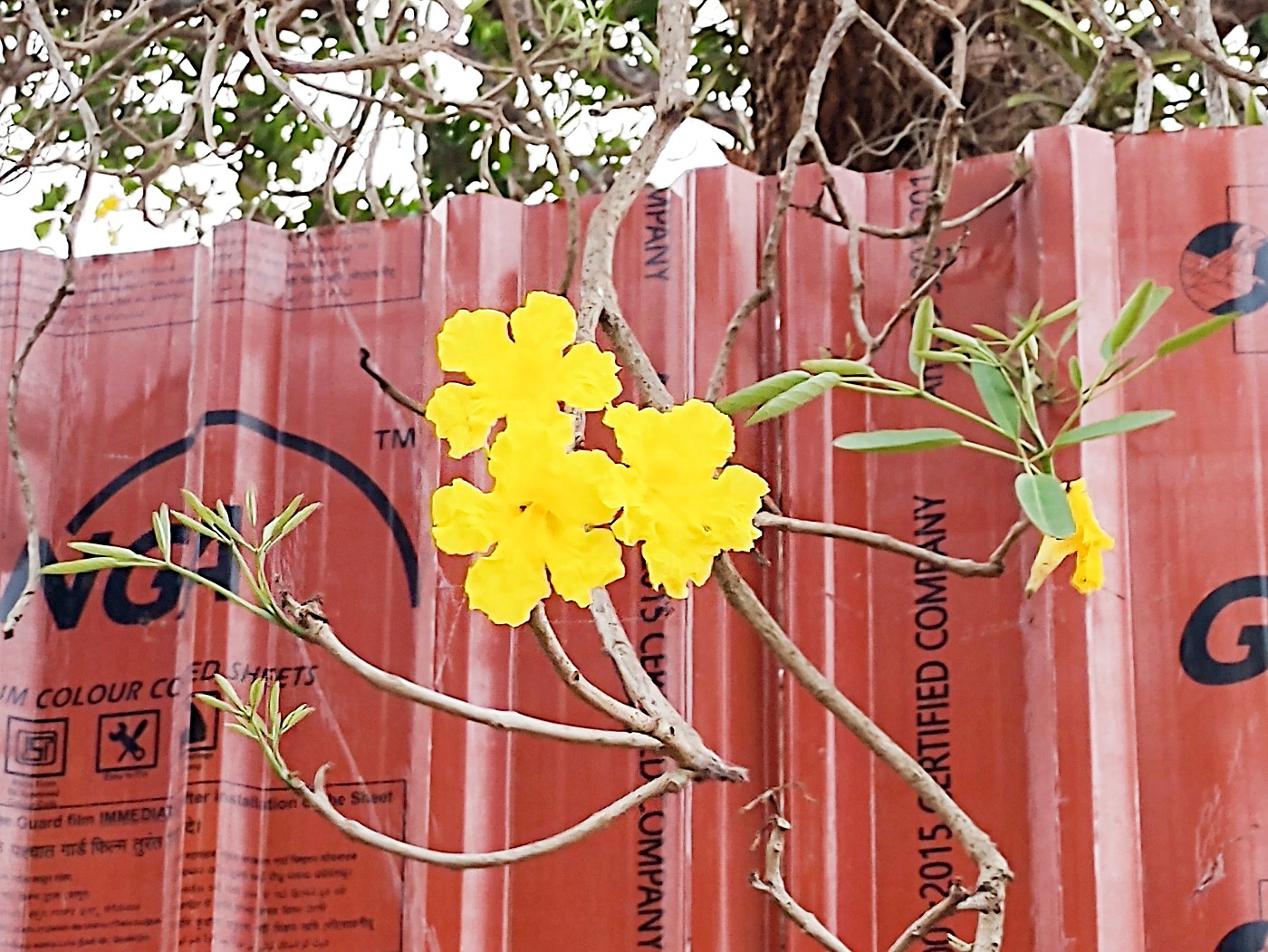
Growing to a height of about 8–12 metres, the tree possesses an elegance that extends beyond its flowers. Its bark is grey and slightly corky, while its palmately compound leaves carry a faint silvery sheen that inspired the name “Silver Trumpet Tree”. The crown is often irregular, with two or three dominant branches shaping its form. Even when not in bloom, the tree stands out for its slightly crooked trunk and attractive silvery foliage.
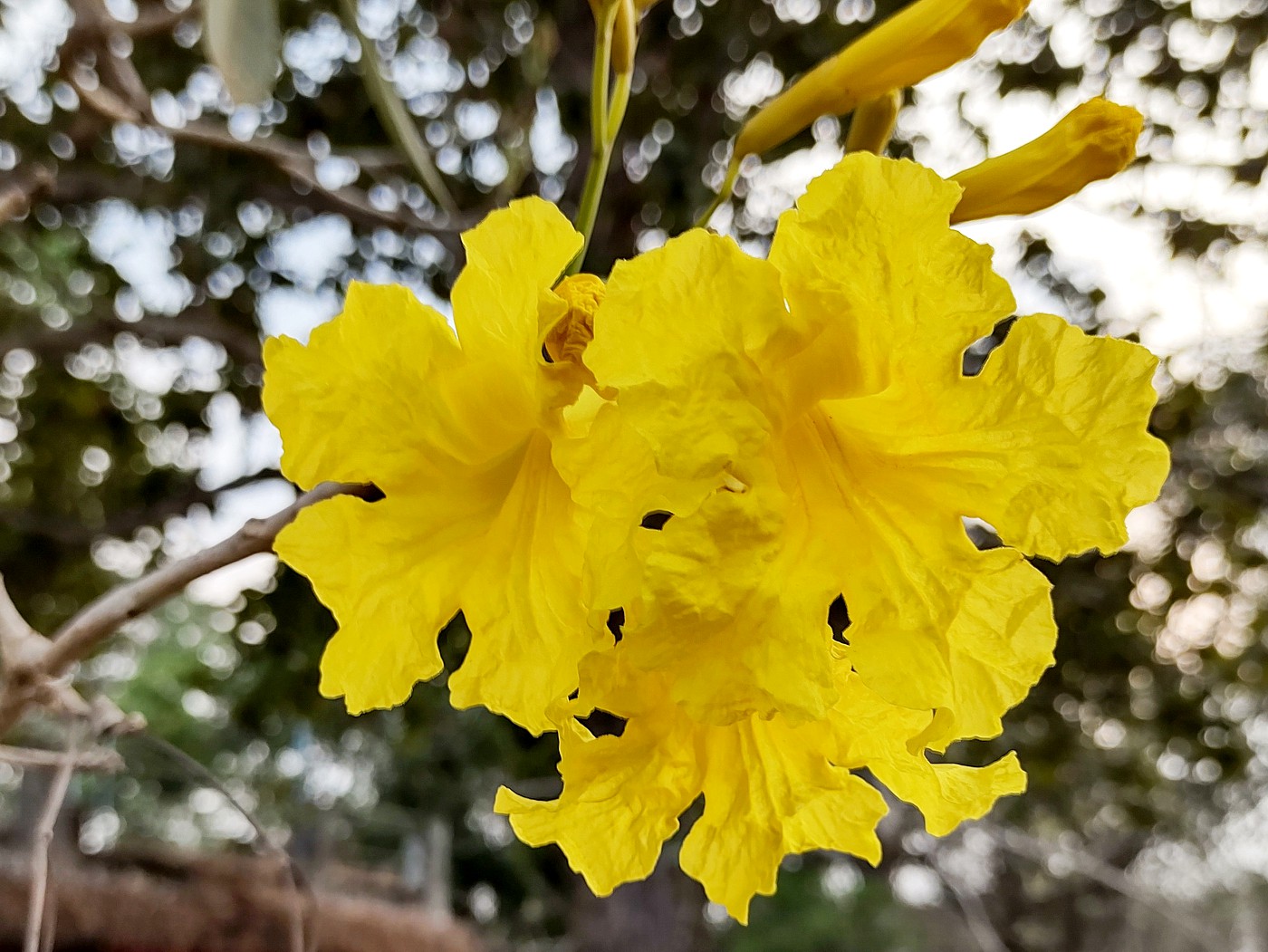
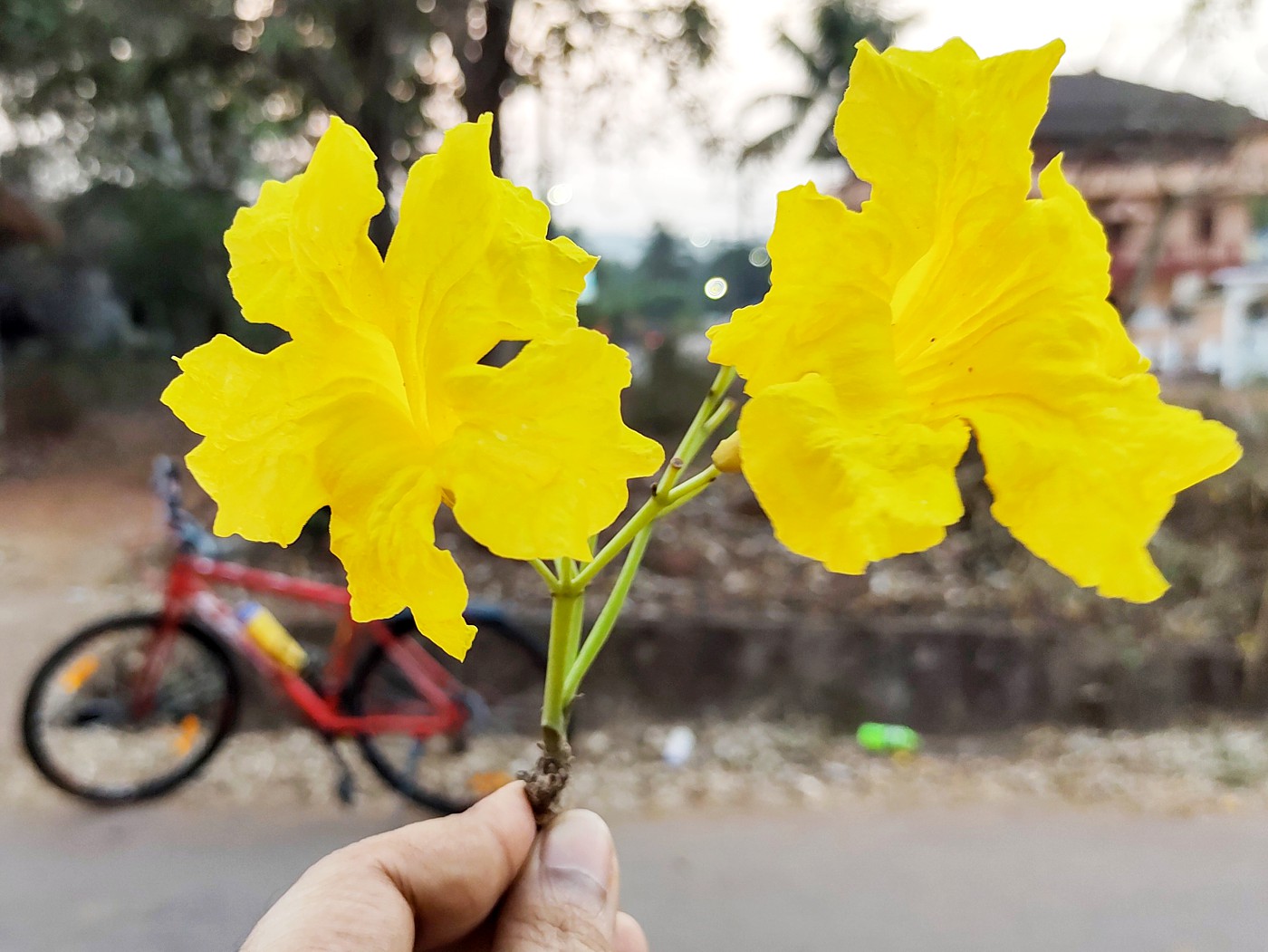
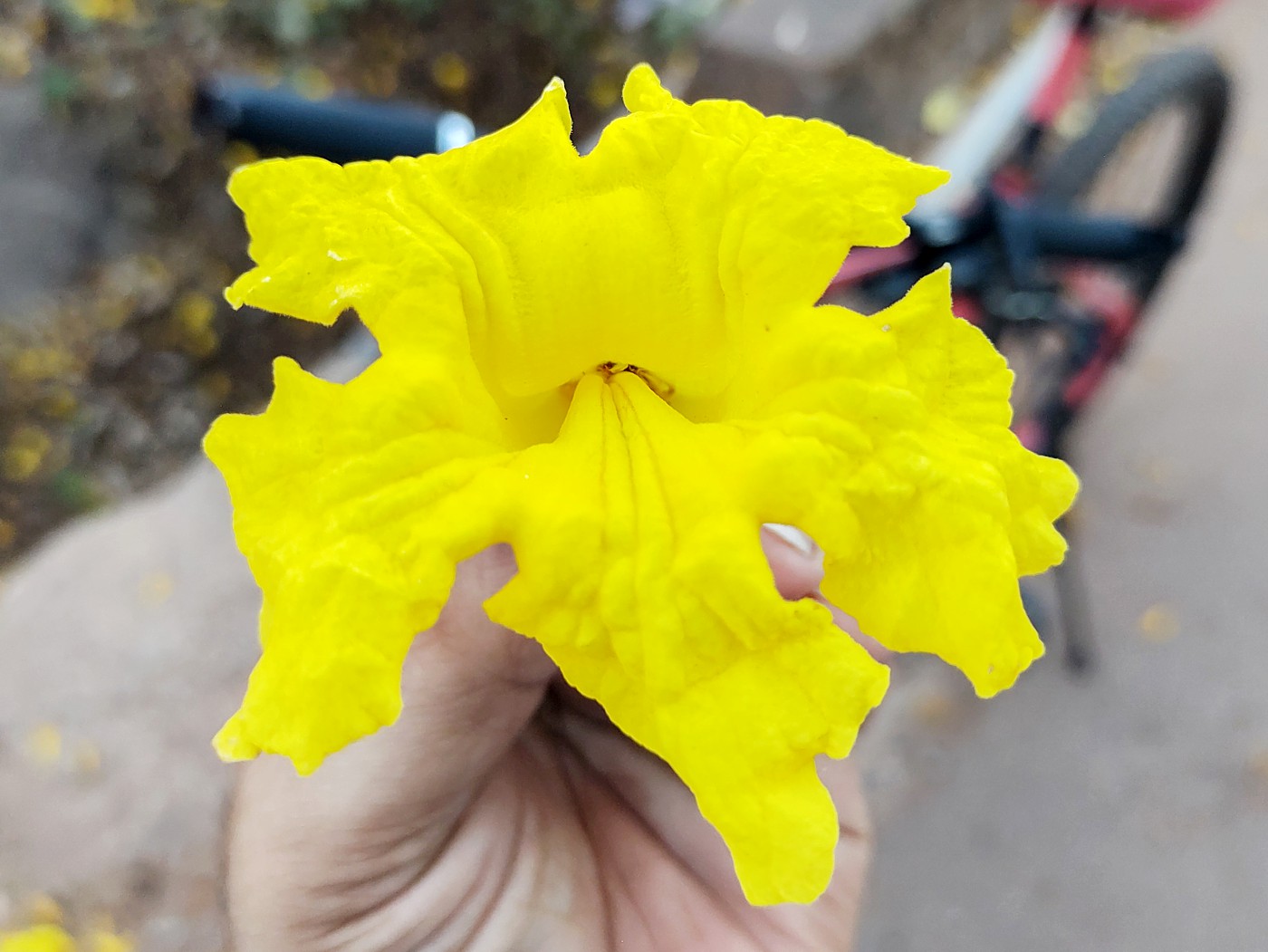
The real spectacle, however, occurs during the flowering season. Usually coinciding with the dry months, the tree produces dense clusters of large tubular flowers with gently flaring, slightly ruffled edges. The blooms range in colour from rich golden yellow to pale yellow or cream and often appear when the tree has shed much of its foliage, making the display even more dramatic.
After flowering, elongated seed pods develop, containing numerous winged seeds that are dispersed by the wind.
So far, this remains the only tree of its kind that I have come across in Goa. Yet somewhere, perhaps others are quietly growing in someone’s garden or along forgotten village roads, revealing themselves for just a few weeks each year when they erupt into gold. If you have spotted one elsewhere in the state, I would be delighted to hear about it.
For now, that unexpected splash of colour along a village road in Maina remains one of the quiet rewards of exploring Goa on two wheels — a reminder that the landscape still holds surprises for those who take the time to notice them.
Other flowering trees in Goa:
Copper Pod Tree:
http://mycyclingdiary.barretomiranda.com/the-yellow-cloud/
Golden Shower Tree:
http://mycyclingdiary.barretomiranda.com/golden-shower-tree/